
Where your tap water actually comes from
A pre-tour briefing for the families joining LifeLearn's first pilot project. What your child will see at the plant, the science running quietly behind the scenes, conversation starters for the drive home, and one or two things to try at the kitchen sink.
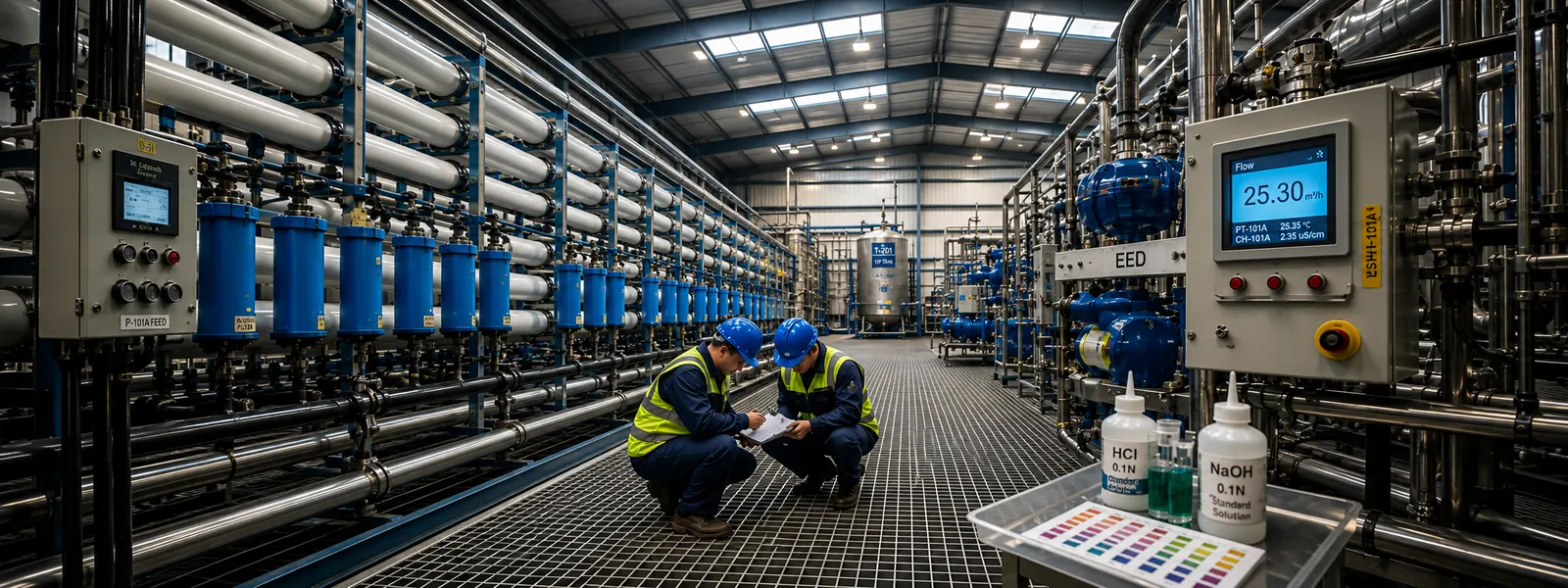
What this tour is
Most children — most adults, honestly — have never seen what happens between the water leaving a reservoir and the water arriving at the tap. This tour is a chance to do exactly that.
The tour is run by Sarah and Mike from the LifeLearners network, working with one of the UK's major water operators. It's the first of LifeLearn's pilot projects. Suitable for children aged 8 to 14. Approximately two hours on site, plus travel.
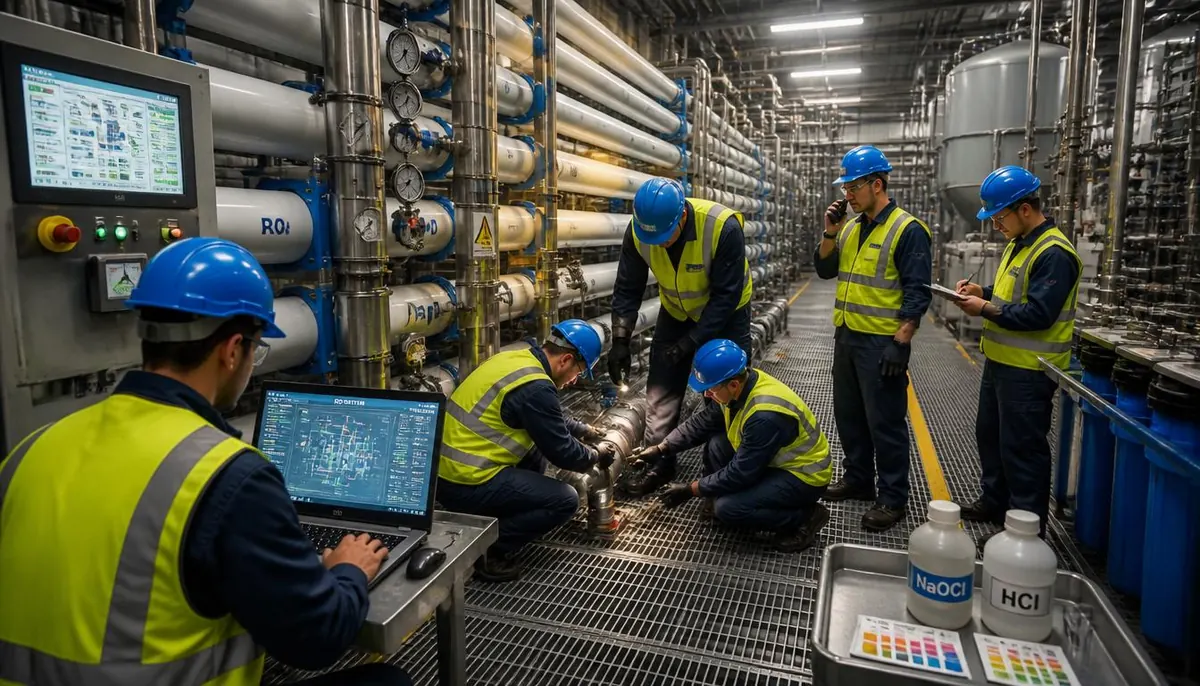
What you'll see, in rough order: the inflow from the source, the screens that catch the rubbish, the dosing bays where chemicals are added, the settling tanks where particles sink, the filters where water passes through layered media, the disinfection stage, and the storage tanks where treated water waits to be pumped into the network. The engineers running the plant will be the ones explaining each stage.
 The people who run it
 Where the water comes from
- Project typePilot project — first in the LifeLearn series
- RegionThames Water (London & Thames Valley) or Anglian Water (East of England) — exact site confirmed closer to the date
- DateTBC — confirmation sent to registered families
- Duration~2 hours on site, plus travel
- Age range8–14
- Families joined12 (places limited)
- OrganisersSarah and Mike, LifeLearners network
- FormatBehind-the-scenes guided tour with plant staff
📍 Where the tour might run
The tour will be hosted at one of the UK's major water operator sites, with the exact location depending on which provider's network we run the pilot through. Two possibilities are currently in conversation:
- Thames Water region — London and the Thames Valley, including most of Greater London (76% coverage), Luton, Surrey, Gloucestershire, North Wiltshire, and parts of Kent.
- Anglian Water region — East of England, including Bedfordshire, Buckinghamshire, Cambridgeshire, Essex, Lincolnshire, Norfolk, Northamptonshire, and Suffolk.
Whichever site is confirmed, the six-stage process described in this briefing applies. Travel details and a final venue address will be sent to registered families once confirmed.
A note on what makes this a project rather than a school trip. The visit is the centre of the work, not the whole of it. Reading this briefing beforehand, watching for specific things on the day, talking about what you saw on the way home, and trying one of the kitchen-sink experiments at the end — those are what turn a two-hour tour into a piece of learning that lasts. The library entry on real-world projects goes deeper on why.
The six stages of water treatment
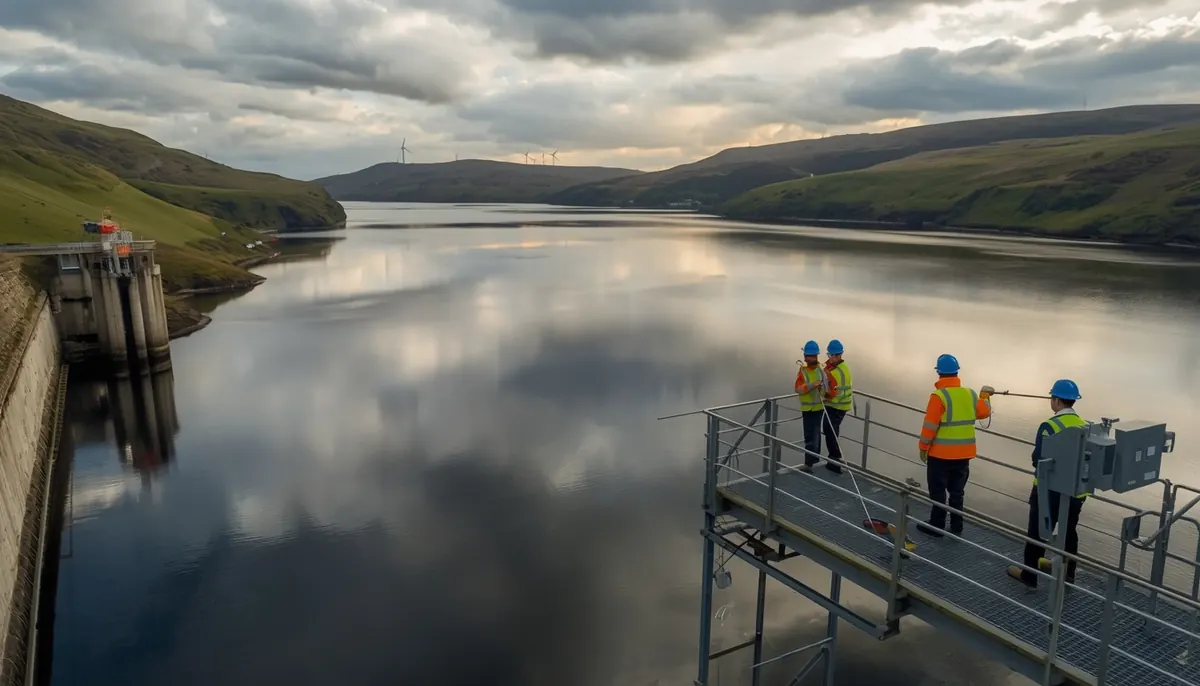
The water arriving at the plant — usually from a river or reservoir — is a long way from drinkable. It has leaves and sticks and silt and bacteria and traces of chemicals. The job of the plant is to take that water and produce something that can be safely run through every kitchen tap in the network. Six sequential stages. You can usually walk the route physically as the water does.
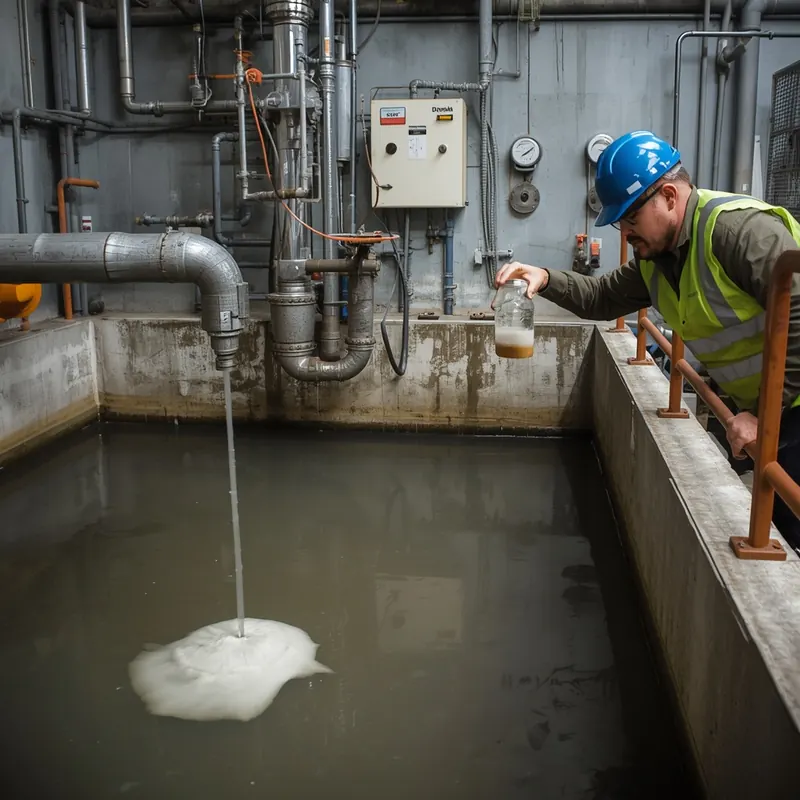
Screening
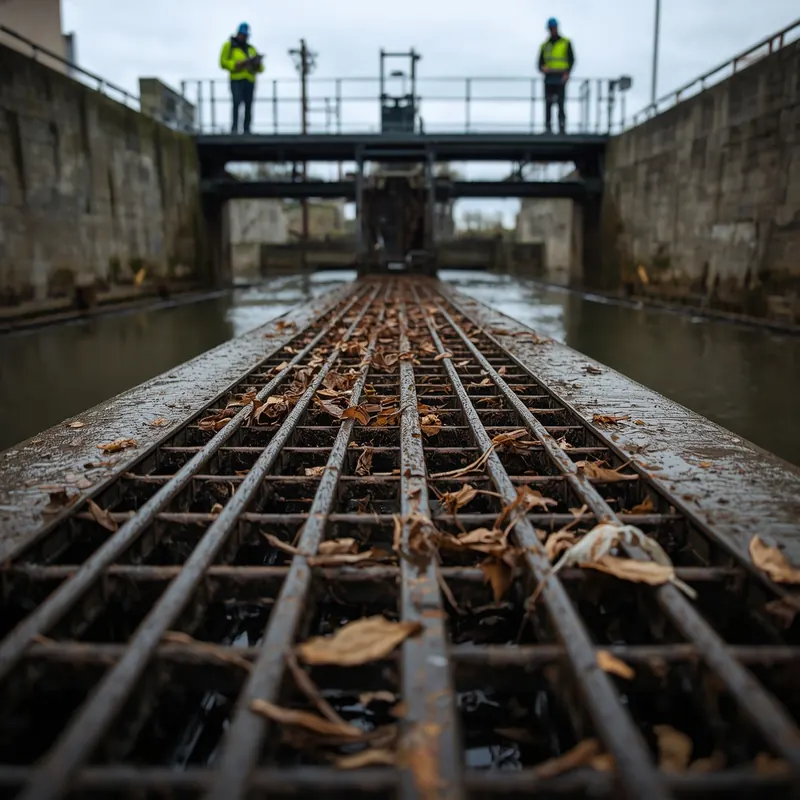
The first stop is a vertical row of metal grids that catch the large stuff — leaves, twigs, the occasional fish, sometimes more surprising things that have ended up in the source water. The screens are essentially industrial sieves, doing nothing more clever than blocking what's too big to pass through.
Coagulation & flocculation
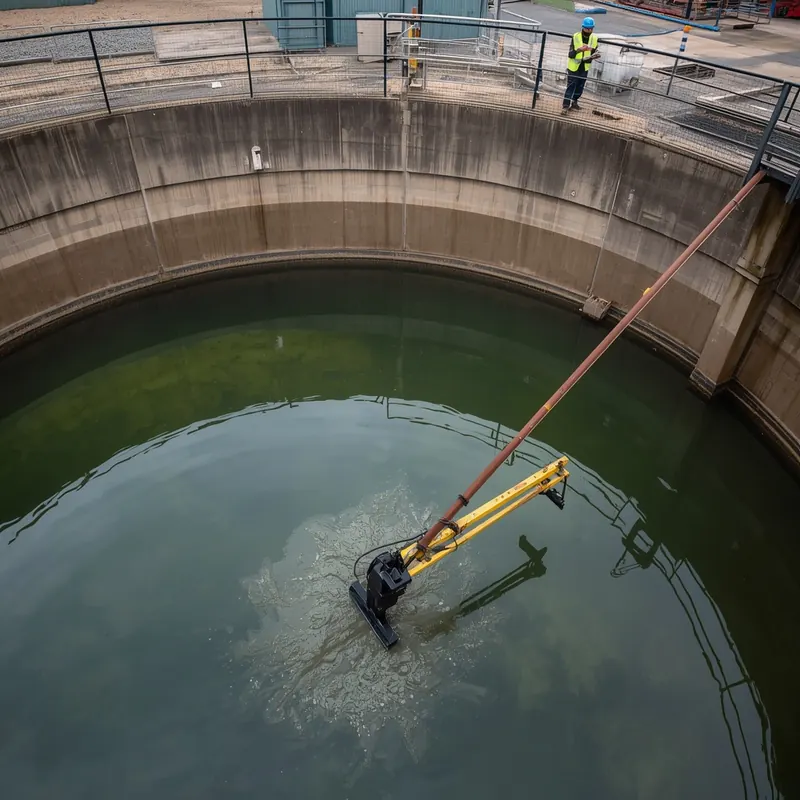
The dirt left after screening is mostly suspended particles too small to see. Tiny particles in water carry electrical charges, which cause them to repel each other and stay dispersed; left alone, they'll never sink or clump.
The plant adds a coagulant — usually aluminium sulfate or an iron salt — which neutralises those charges. The particles can suddenly stick together, forming visible clumps called flocs. This is the first stage where the chemistry is doing real work.
Sedimentation
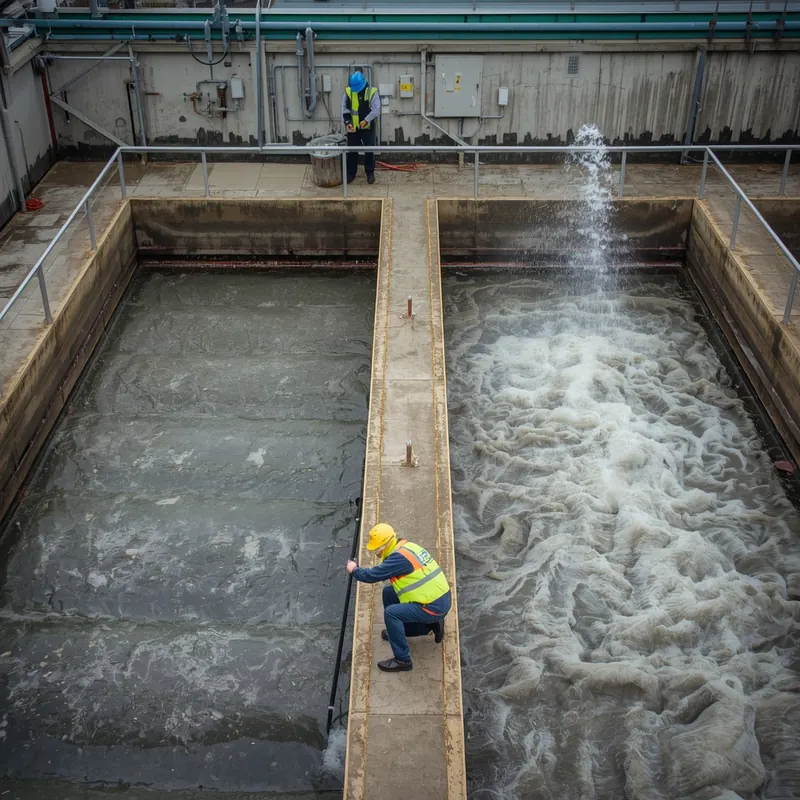
The flocs are now heavy enough to sink. Water moves slowly through long tanks — slow enough that gravity has time to do its job — and the flocs settle to the bottom as sludge, leaving cleaner water above.
Most of the dirt is now gone. The sludge gets removed and treated separately; that's a whole other industrial process worth pointing out.
Filtration
The water then passes through filter beds — typically layers of sand, gravel, and activated carbon. Sand catches what the sedimentation tanks didn't. Activated carbon, with its enormous internal surface area, absorbs dissolved chemicals and the compounds that cause taste and smell.
Disinfection
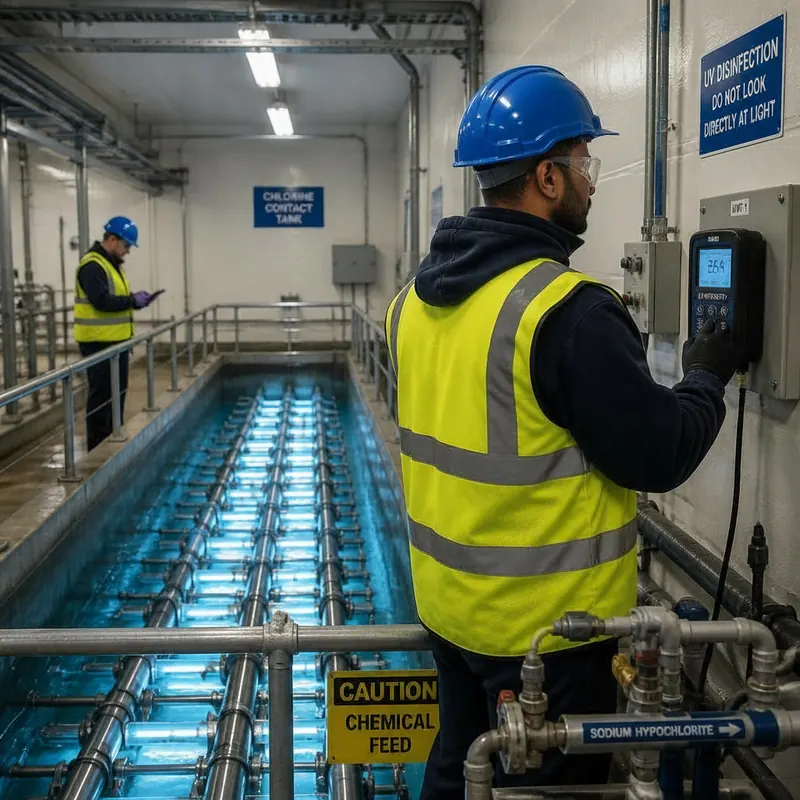
The final treatment stage kills anything biological that has survived. Most UK plants use chlorine; some use UV light; some use ozone. Whichever method, the goal is to destroy microorganisms that could cause cholera, typhoid, dysentery, or any of the dozens of other water-borne illnesses that historically devastated populations.
This is the step that matters most for public health, and it's the reason mains water is one of the great quiet inventions of modern life.
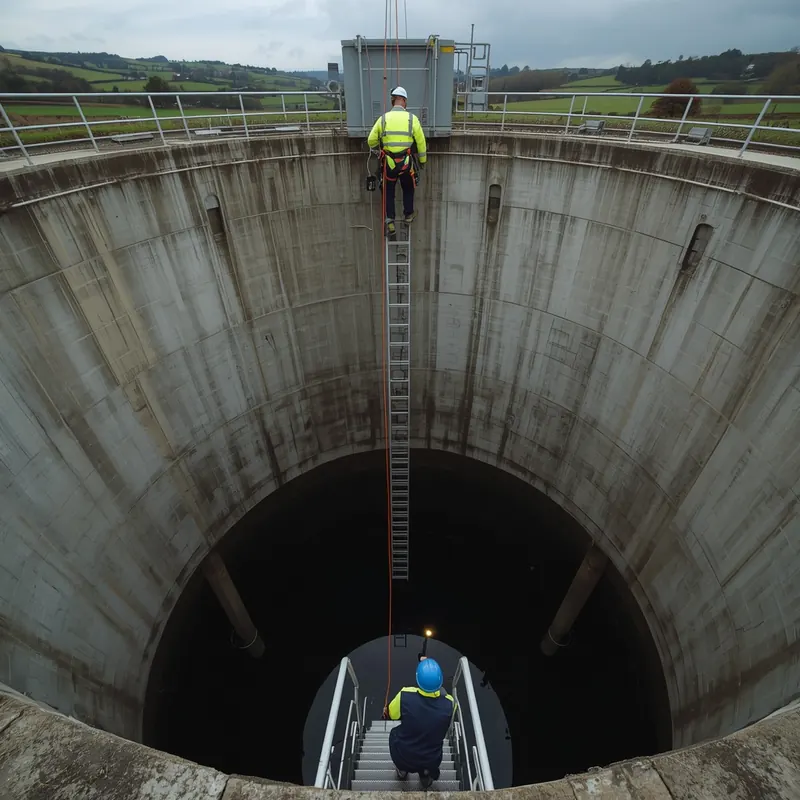
Storage & distribution
Treated water is stored in covered tanks until it's needed, then pumped through the underground pipe network. Pressure does most of the work — gravity, where possible, and pumps where the geography demands.
The water reaching your kitchen tap may have spent anything from hours to days in the system between the treatment plant and your house.
The sciences your child is using
A water treatment plant is genuinely interdisciplinary. Without the words ever being used, your child is engaging with five fields at once.
Chemistry
Every time a coagulant is added, an acid neutralised, a chlorine concentration measured, a pH adjusted. The plant runs on continuous chemical reasoning. pH itself is a useful concept: drinking water sits close to 7 (neutral) on a 0-to-14 scale.
Biology
Every time a microbiologist tests for bacteria, every time disinfection is calibrated to kill specific pathogens. The biology is mostly invisible — you can't see microorganisms — but it's why disinfection exists at all.
Physics
Gravity does the sedimentation. Pressure does the distribution. Flow rates govern the filtration. The whole plant is essentially applied fluid mechanics. Watch how water moves between stages.
Engineering
The building exists because someone designed every pipe, pump, valve, and sensor. Civil, mechanical, electrical, and software engineering. A working plant is a continuous engineering achievement.
Environmental science
Where the water comes from, where the sludge goes, what happens to the river downstream of the abstraction point. The plant is part of a watershed, and decisions there have consequences for ecosystems and communities downstream.
The point
None of these disciplines have to be named for your child to start thinking across them. You can have a substantial conversation on the drive home about whether physics or chemistry was doing more work, without anyone writing a list of subjects.
Talk about it
Some questions to keep loose in the back of your mind for the day, or to pull out on the drive home. The questions don't need clever answers. The point is the thinking they prompt.
- Which stage felt like it was doing the most work? Why?
- If you had to remove just one stage, which would cause the worst problems?
- What would it have been like to drink river water in 1850, before any of this existed? Who got sick? Who didn't?
- Which of the sciences you saw — chemistry, biology, physics, engineering — would you most want to do for a living?
- Where does the sludge from sedimentation go? Could it be useful?
- The plant runs 24 hours a day, every day, with people working through the night. Why does it have to?
- How much water do we use in a single day at home? Have we ever counted?
If one question lands and your child wants to keep pulling at it — let them. The follow-up conversations are where projects start turning into longer-form interests.
Try this at home
Two simple kitchen-sink activities that connect directly to what you'll see on the tour. Either works equally well before the tour (as preparation) or after (as consolidation).
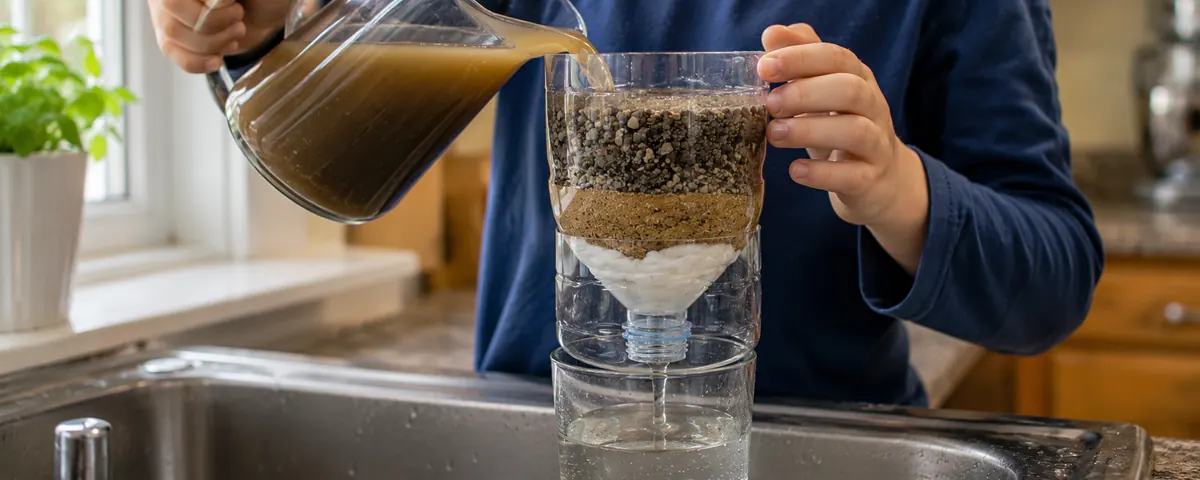
A simple filter
Cut the bottom off a plastic bottle. Invert it. Layer cotton wool at the narrow end, then gravel, then sand. Pour muddy water through and watch what comes out the bottom.
The principle is exactly what filtration does at the plant — different particle sizes get caught at different layers — but the limits show up too. Bacteria and dissolved chemicals pass straight through. Filtration alone isn't enough.
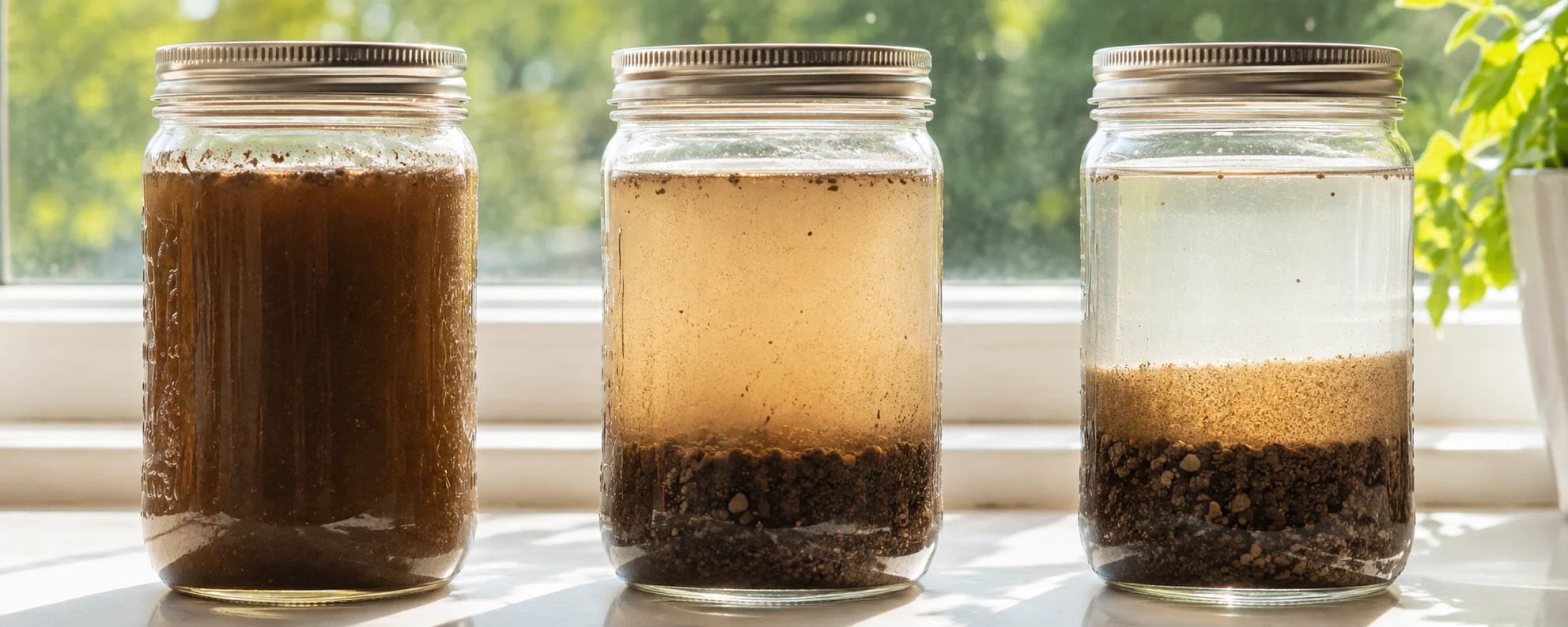
Sedimentation in a jar
Half-fill a glass jar with water from a stream or pond, or tap water with a teaspoon of garden soil stirred in. Seal it, shake it, set it on a windowsill. Watch over the course of an hour, then four hours, then a full day.
The biggest particles sink first. The smallest take a remarkably long time. This is sedimentation without coagulation; at the plant, the chemistry speeds it up dramatically.
📌 If your child becomes interested
The obvious next step is a longer-form project — tracking water clarity in a local stream over several weeks, or testing the pH of different water sources around your area with strips from a fish-tank shop. The bird-feeder principle from the project guide applies: small projects done well lead naturally to larger ones.
Key terms
A handful of words it's worth knowing before the tour, so explanations on the day don't get tangled in vocabulary.
What this means for you
- A water treatment plant runs six sequential stages: screening, coagulation, sedimentation, filtration, disinfection, and storage. You can walk the route the water takes.
- The whole process is genuinely interdisciplinary — chemistry, biology, physics, engineering, and environmental science, all running at once.
- Disinfection is the stage that protects public health most directly. Mains water is one of the great quiet inventions of modern life.
- The conversation back home matters as much as the tour itself; questions consolidate what was seen.
- The simple-filter and sedimentation-jar activities translate directly to plant processes and can be done at the kitchen sink in under an hour each.
- This is a project, not a trip. The plant visit is the centre, but the family conversations and the at-home activities are what turn it into learning.
Help us build this
Two ways to shape what LifeLearn builds next.
Vote on what comes next
We've set up a poll in the Projects community group. The most-voted project type gets organised first. It takes thirty seconds, and your vote materially changes what we build.
Vote in the poll →Host a project
Have a workplace, a network, or a local connection that could host a project? Manufacturing, energy, the arts, conservation, science, technology — anywhere children rarely get to see behind the scenes.
Get in touch →Related guides in the library
More projects on the way
The water plant tour is the first of LifeLearn's pilot projects. More are being lined up around the UK as the network grows. Browse the projects page to see what else is coming.